How to Grow High-Quality Dragon Fruit for Premium Export Markets
Growing dragon fruit is not only about achieving high yields. For premium export markets, the real challenge is producing high-quality dragon fruit with attractive skin, healthy green bracts, good size, excellent eating quality and consistently low pesticide residues.
So, how do you grow the best-quality dragon fruit?
The answer starts in the farm and continues throughout the entire production cycle.
What Makes High-Quality Dragon Fruit?
Premium dragon fruit needs to meet several quality requirements. Export buyers generally look for fruit with:
Uniform size and shape
Bright, attractive skin colour
Fresh green bracts
Clean, undamaged skin
Firm flesh and good texture
Good sweetness and eating quality
Appropriate maturity at harvest
No insects, mould or disease
Low pesticide residues and compliance with maximum residue limits (MRLs)
For international markets such as Australia, New Zealand, Canada and Europe, appearance alone is not enough. Food safety, traceability and consistent quality are equally important.
Choosing the Right Dragon Fruit Variety
High-quality production begins with selecting suitable planting material.
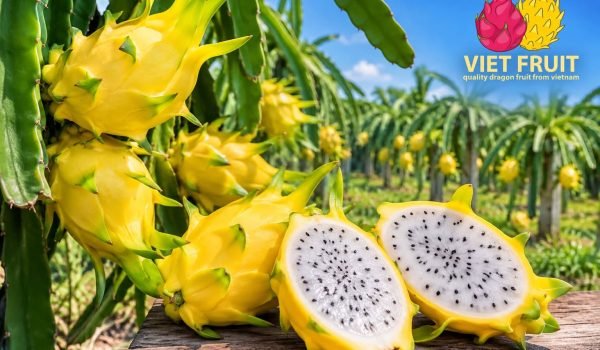
Red-flesh, white-flesh and yellow dragon fruit varieties can have different requirements and characteristics. Farmers should select healthy, vigorous planting material from reliable sources and choose varieties that are suitable for the local climate and target market.
Healthy plants establish more quickly and provide a stronger foundation for consistent fruit production.
Soil and Nutrition Are Essential
Balanced plant nutrition is one of the most important factors affecting dragon fruit quality.
Research has shown that nitrogen fertilization can influence both the productivity and quality of pitaya. However, more fertilizer does not necessarily mean better fruit.
Excessive nitrogen can encourage excessive vegetative growth and may negatively affect fruit quality. A balanced nutrition program should provide the nutrients required by the plant while taking soil conditions, plant development and crop load into account.
For premium dragon fruit production, farmers should focus on:
Soil health
Organic matter
Balanced NPK nutrition
Calcium and other essential nutrients
Proper fertilization timing
Regular monitoring of plant development
The objective is not simply to produce more fruit, but to produce better fruit.
Proper Irrigation Improves Fruit Quality
Water management is another critical factor in producing premium dragon fruit.
Irregular irrigation can cause stress during important stages of fruit development. Excessive water can also create unfavourable conditions for root and disease problems.
A well-managed irrigation system should provide the plant with sufficient water without creating prolonged waterlogging.
For commercial dragon fruit farms, monitoring soil moisture and adjusting irrigation according to weather conditions, soil type and plant requirements can help improve consistency.
Pruning and Canopy Management
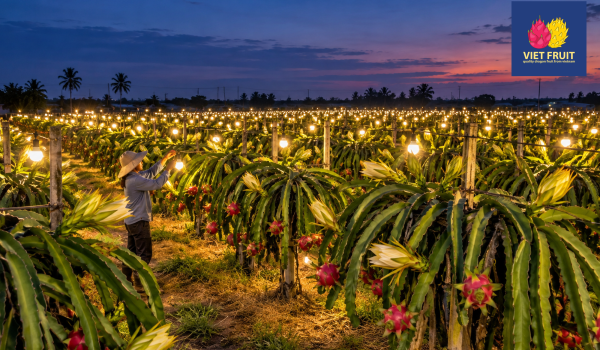
Dragon fruit plants require regular pruning to maintain a productive and healthy canopy.
Removing weak, damaged or unnecessary branches helps improve:
Light penetration
Air circulation
Plant structure
Disease management
Fruit development
Harvest efficiency
Good canopy management is particularly important in humid growing conditions, where poor air circulation can increase the risk of fungal diseases.

Disease and Pest Management
Premium export fruit must be free from visible pest and disease damage.
An effective dragon fruit pest management program should focus on prevention rather than relying solely on chemical treatments.
Farmers should regularly inspect plants for:
Fungal diseases
Bacterial diseases
Insects
Scale insects
Mealybugs
Fruit flies
Damaged or infected branches
Integrated pest management can help farmers reduce unnecessary pesticide applications while protecting the crop.
This is particularly important for export markets with strict pesticide residue requirements.
Low-MRL Dragon Fruit Starts at the Farm
For international exporters, pesticide residue management is an essential part of quality control.
Producing low-MRL dragon fruit requires careful control of agricultural inputs from planting through harvest.
Farmers should use only approved agricultural products, follow the correct application rates and respect pre-harvest intervals.
Regular residue testing can provide additional assurance that fruit meets the requirements of the intended export market.
At Viet Fruit, we believe that export quality should not be created at the packing house. It must begin in the field.
Harvesting at the Right Maturity
Harvest timing has a major influence on dragon fruit quality.
Fruit harvested too early may not develop the desired eating quality, while fruit harvested too late can have reduced shelf life and increased susceptibility to damage.
Harvesters should carefully assess fruit maturity, colour development and market requirements before picking.
The fruit should also be handled carefully during harvesting to avoid scratches, bruising and damage to the skin and bracts.
Post-Harvest Handling Is Just as Important
Even excellent fruit can lose quality after harvest if it is handled incorrectly.
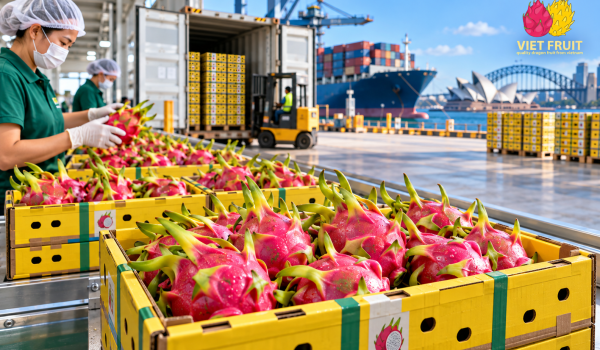
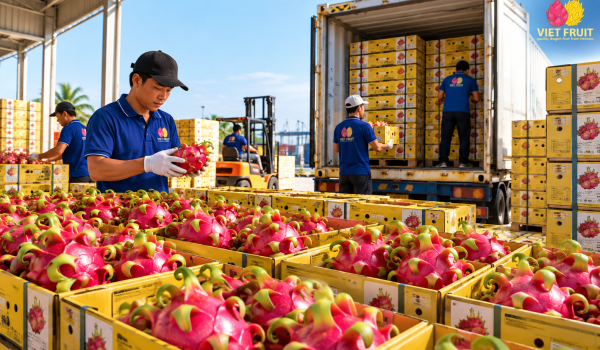
After harvesting, dragon fruit should be carefully inspected, sorted and prepared according to the requirements of the destination market.
For premium export dragon fruit, quality control should include checking for:
Skin damage
Insects
Disease
Mould
Bruising
Incorrect maturity
Size variation
Poor bract condition
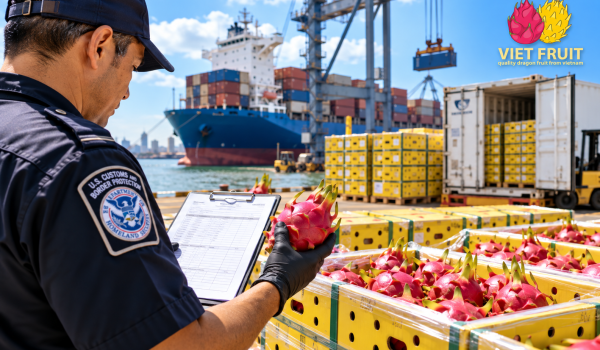
Proper cooling, packing and transportation are also essential for maintaining quality throughout the supply chain.
From Farm to Export Container
Producing premium dragon fruit is therefore a complete process.
Good planting material → healthy soil → balanced nutrition → precise irrigation → effective pruning → integrated pest management → correct harvest maturity → careful packing → controlled cold chain.
Every step contributes to the final quality of the fruit.
At Viet Fruit, we work with selected farms and growers to source dragon fruit for international markets. Our focus is not simply on volume. We aim to deliver consistent, high-quality Vietnamese dragon fruit that meets the demanding requirements of professional importers and retailers.
For markets such as Australia, New Zealand, Canada and Europe, quality, food safety, traceability and reliable supply are essential.
Looking for Premium Vietnamese Dragon Fruit?
Viet Fruit supplies Vietnamese red, white and yellow dragon fruit for international markets, with a strong focus on quality control, low pesticide residues and export compliance.
Are you looking for a reliable Vietnamese yellow dragon fruit supplier? Contact Viet Fruit to discuss your requirements, packaging specifications and target market.
Email: sales@viet-fruit-trading.com Hotline: (+84) 77 5055 568