
International Packaging Requirements for Exporting Vietnamese Dragon Fruit
Vietnamese dragon fruit is recognized worldwide for its quality and appearance, making it a popular product in many export markets.
10/23/20253 min read
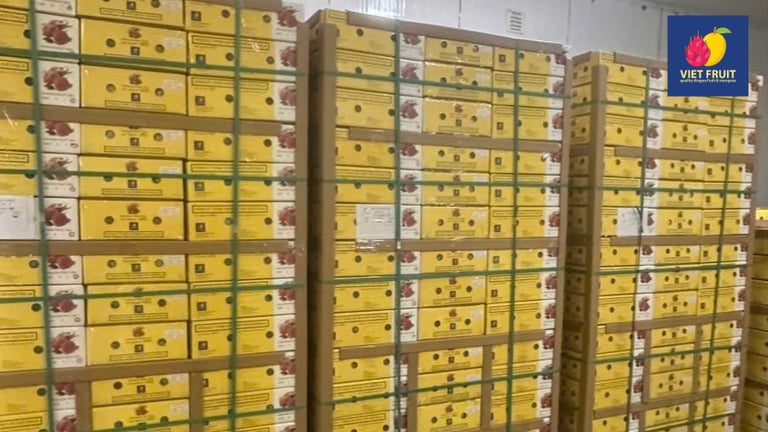
International Packaging Requirements for Exporting Vietnamese Dragon Fruit
Vietnamese dragon fruit is recognized worldwide for its quality and appearance, making it a popular product in many export markets. However, each destination has its own regulations covering fruit size, packaging specifications, phytosanitary treatments, and traceability requirements. Exporters must understand these differences to ensure smooth customs clearance and market acceptance.
Understanding Dragon Fruit Varieties
Vietnam produces several commercially important dragon fruit varieties that are accepted in international trade:
White-fleshed dragon fruit
Red-fleshed dragon fruit
Pink-purple dragon fruit
Market access requirements may vary depending on the variety being shipped, so exporters should confirm destination-specific regulations before arranging production and packaging.
Post-Harvest Treatment Requirements
Many importing countries require approved phytosanitary treatments to eliminate pests and reduce biosecurity risks.
Irradiation Treatment
This method uses controlled radiation technology to eliminate insects and harmful organisms while maintaining fruit quality. It is commonly required for markets with stringent quarantine regulations.
Vapor Heat Treatment (VHT)
VHT exposes fruit to carefully controlled heat and humidity conditions that eliminate pests without chemical applications. This treatment is widely accepted in several Asia-Pacific markets.
Export Standards for North America
The United States maintains strict import controls for fresh fruit. Exporters must comply with approved treatment procedures, traceability requirements, and prescribed packaging standards.
Typical requirements include:
Approved growing area registration
Certified packing facilities
Irradiation treatment
Standardized carton dimensions
Defined fruit weight ranges
Packaging free from metal staples or fasteners
Meeting these requirements is essential for market entry and regulatory approval.
Requirements for Australia and New Zealand
Australia and New Zealand place strong emphasis on quarantine security and pest management.
Key expectations generally include:
Vapor Heat Treatment certification
Registered farms and packing houses
Compliance with pesticide residue limits
Standardized export carton specifications
Documented traceability throughout the supply chain
Because biosecurity regulations are among the strictest in the world, exporters should verify that all treatment records and certificates are complete before shipment.
Standards for Japan and South Korea
These markets require high levels of product quality, food safety, and traceability.
Exporters typically need to demonstrate:
Compliance with maximum residue limits (MRLs)
Approved VHT treatment
Farm and packing facility registration
Consistent fruit sizing and quality grading
Proper export packaging and labeling
Careful quality control is particularly important because buyers in these markets often expect premium-grade fruit.
Middle East and Indian Market Preferences
Compared with some highly regulated destinations, these markets generally offer greater flexibility regarding packaging formats and fruit sizes.
Common considerations include:
Carton weight options based on buyer requirements
Flexible fruit count per carton
Availability of multiple dragon fruit varieties
Attractive packaging presentation for retail channels
Although regulatory requirements may be less restrictive, maintaining quality consistency remains essential for customer satisfaction and repeat business.
Requirements in Europe
European buyers focus heavily on food safety and sustainability.
Exporters should pay close attention to:
Compliance with pesticide residue regulations
Product traceability systems
Accurate labeling
Packaging safety and environmental requirements
Documentation supporting food-contact materials and packaging compliance
The European Union is also implementing broader packaging sustainability rules that will increasingly influence packaging design and material selection.
China
Chinese imports often require:
Registered growing area codes
Packing facility registration
Compliance with bilateral quarantine protocols
Packaging designed for efficient container loading
Southeast Asia
Countries such as Malaysia and Indonesia generally emphasize:
Consistent fruit grading
Appropriate carton sizes
Basic traceability requirements
Reliable supply and competitive pricing
Air Freight Markets
For destinations served primarily by air transport, packaging must provide additional protection while maintaining acceptable shipment weights and preserving fruit quality throughout transit.
Best Practices for Export Packaging
Regardless of destination, successful exporters should focus on:
Strong traceability systems
Accurate labeling
Compliance with treatment requirements
Proper carton strength and ventilation
Consistent fruit sizing and grading
Food safety verification
Up-to-date regulatory monitoring
A well-designed packaging and compliance program reduces shipment risks, protects product quality, and improves access to premium international markets.
Conclusion
Global dragon fruit exports require more than attractive packaging. Exporters must understand the unique regulatory, phytosanitary, and quality requirements of each destination market. By combining proper post-harvest treatment, compliant packaging, effective traceability, and strong quality management, Vietnamese suppliers can strengthen their competitiveness and expand their presence in international markets.
As packaging regulations and sustainability expectations continue to evolve worldwide, businesses that proactively adapt their packaging systems will be best positioned for long-term export success.
Address
KM 26, Minh Hoa Village
Ham Thuan Nam
Binh Thuan
Vietnam
About us
Behind every shipment is a dedicated team of growers, manufacturers and export specialists who share a passion for Vietnam's fruit and products.
@ Copyrights 2024 Viet Fruit Trading Limited
Connect with us
sales@viet-fruit-trading.com
+ 84 77 5055 568 (WhatsApp)
disclamer - contact us - FAQ - follow us