This guide from Viet Fruit explains the essential checks for wholesalers, distributors, retailers and food-service buyers should complete before placing a commercial order.
Sourcing dragon fruit from Vietnam requires more than comparing prices. Importers need a clear product specification, a reliable Vietnam dragon fruit supplier, market-specific compliance, documented quality control and a workable cold-chain plan.
Why source dragon fruit from Vietnam?
Vietnam has established dragon fruit production areas and experienced export supply chains. Buyers can source red-flesh and white-flesh varieties in multiple grades and packaging formats, with shipment by sea or air depending on volume, destination and urgency. However, capabilities differ among Vietnam fruit suppliers, so every claim should be verified against the specific order.
Define your product specification
A useful quotation starts with a complete request for a quotation or RFQ.
Variety, Grade and Size – Specify the following information:
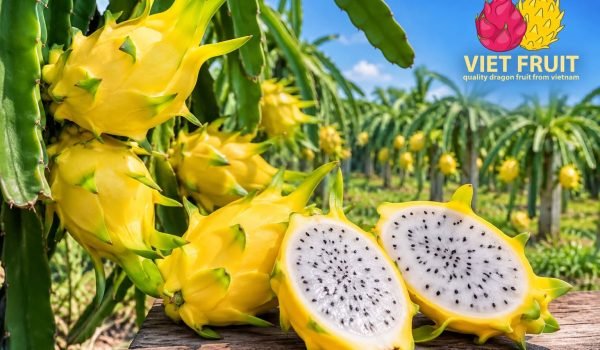
- Red-flesh or white-flesh dragon fruit
- Required grade and weight per fruit
- Maturity, skin color and firmness
- Acceptable cosmetic or physical defects
- Required order volume
Viet Fruit’s current specification includes Grade A dragon fruit ranging from approximately 350 grams to more than 800 grams, subject to seasonal availability.
Packaging Requirements – Importers should also confirm:
- Net weight and fruit count per carton
- Protective packaging materials
- Pallet configuration
- Label language and mandatory information
- Private-label requirements
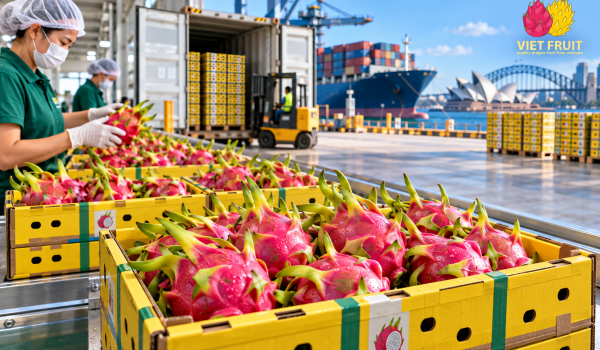
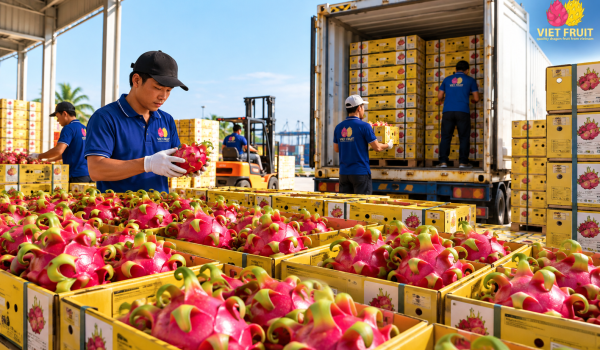
Current packaging options include 3 kg, 5 kg, 9 kg, and 12 kg net-weight cartons. Buyers seeking red dragon fruit bulk export volumes or a white-flesh dragon fruit supplier should clearly state whether mixed varieties or size ranges are acceptable.
Check destination’s import requirements
Fresh-fruit import conditions depend on the product, country of origin, and destination. Because regulations may change, importers should always check the relevant authority before confirming and dispatching a shipment. For example:
- Australia publishes import conditions through BICON.
- Canada uses the Automated Import Reference System.
- The United States provides requirements through its Agricultural Commodity Import Requirements database.
- New Zealand publishes an Import Health Standard for fresh dragon fruit.
The buyer and supplier should agree in writing on who will manage import permits, required treatments, phytosanitary certification, labelling, customs declarations and supporting documents. Never assume that a treatment or certificate accepted in one country will automatically be valid in another market.
Evaluate The Supplier – Not Only The Price
When comparing tropical fruit wholesale suppliers, request evidence of their operational capabilities. A professional fresh dragon fruit exporter in Vietnam should clearly explain its sourcing, packing, inspection, traceability and quality-claims procedures.
Supplier Verification Checklist
- Verify the supplier’s legal company information and export contact details.
- Request current specifications, representative shipment photographs, and packaging options.
- Ask how farms, packing dates, lot codes and inspection records are connected.
- Confirm the role of any partner in packing or treatment facilities.
- Verify certifications directly, including their validity, product scope and covered production sites.
If GlobalG.A.P. certification is mandatory, request the certificate number and verify its scope rather than relying only on a logo or general statement.
Agree on Measurable Quality Standards
Terms such as “premium” or “export quality” are subjective. The purchase specification should define measurable acceptance criteria, including:
- Size and weight tolerance
- Maturity and skin color
- Firmness and cleanliness
- Pest or mechanical damage
- Decay and bract condition
- Carton and pallet condition
Request dated inspection photographs or videos showing representative fruit, weight checks, carton markings and loading conditions.
Required Export Documentation; a typical export file may include:
- Commercial invoice
- Packing list
- Bill of lading or air waybill
- Phytosanitary certificate
- Certificate of origin
- Treatment certificate, where applicable
Additional permits, declarations, laboratory results or inspection records may be required by the destination authority or buyer.
Plan the Cold Chain and Freight Method
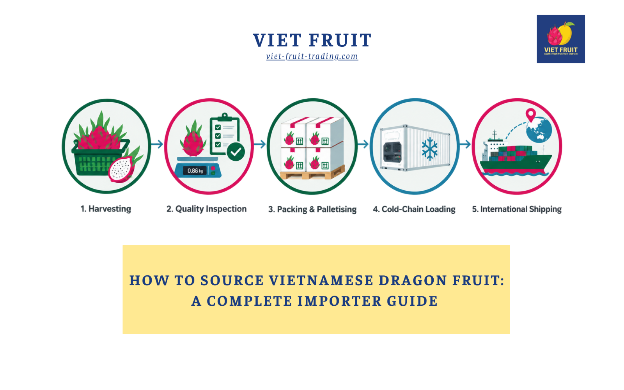
Cold-chain fruit export from Vietnam involves more than selecting a storage temperature. Importers should consider pre-cooling, handling time, ventilation, humidity, packaging strength, loading practices, and transit duration.
Viet Fruit currently lists storage at approximately +3°C and an estimated shelf life of around 30–35 days. These figures are planning references rather than unconditional guarantees. Actual shelf life depends on the variety, maturity, treatment, packaging, transportation route and temperature history.
Sea Freight or Air Freight? Which solution can be more appropriate?
- Trial orders
- Urgent deliveries
- Smaller premium shipments
- Markets requiring shorter transit times
Sea freight generally suits larger commercial volumes, while air freight may be more appropriate. Before dispatching, confirm reefer settings, container condition, loading pattern, ventilation requirements, and temperature monitoring.
Start with a Controlled Trial Order
A trial order allows the buyer and supplier to test the product specifications, packaging, documentation, communication and arrival quality before increasing the order volume. Upon arrival, record:
- Carton condition
- Fruit temperature
- Representative defects
- Saleable yield
- Customer or retailer feedback
Structured feedback helps the exporter adjust future shipments and develop a more consistent, repeatable supply programme.
Importer Checklist Before Confirming an Order
- Product variety, grade, size, and tolerances are documented.
- Packaging, labels, palletization, and destination are confirmed.
- Current import conditions have been verified.
- Responsibilities for permits, treatments, and certificates are clear.
- Quality-control evidence and claims procedures are agreed.
- Cold-chain settings and transportation routes are confirmed.
- Incoterm, payment terms and quotation exclusions are documented.
About Viet Fruit Trading
Viet Fruit supplies fresh Vietnamese dragon fruit to international importers, wholesalers and distributors. The company offers red-flesh and white-flesh dragon fruit, commercial grading, multiple carton formats and transportation by sea or air according to the agreed specification.
Viet Fruit coordinates fruit sourcing, quality inspections, packing, documentation and export logistics. Where specialized treatment is required, the company works with qualified partners and confirms the applicable import pathway before shipment.
Source Vietnamese Dragon Fruit with Confidence
The right supplier should help importers convert their commercial requirements into a clear, compliant, and traceable shipment plan. Working with Viet Fruit gives buyers access to export-ready Vietnamese dragon fruit supported by responsive communication, flexible packaging and coordinated logistics.
Planning a trial order or recurring dragon fruit import programme? Contact Viet Fruit to request current availability, product specifications, packaging options and a quotation prepared for your destination market.
Email: sales@viet-fruit-trading.com Phone: +84 77 5055 568