The Importance of Vapor Heat Treatment for Vietnamese Dragon Fruit Exports
Vietnam is one of the world’s important producers of dragon fruit. With its attractive appearance, refreshing taste and nutritional value, Vietnamese dragon fruit is popular in international markets. However, exporting fresh dragon fruit requires more than excellent farming and careful packaging. Vapor Heat Treatment (VHT) plays a crucial role in meeting phytosanitary requirements and protecting importing countries from harmful pests.
For exporters such as Viet Fruit, VHT is an important part of delivering safe, high-quality dragon fruit to international customers, particularly in markets with strict biosecurity regulations.
What Is Vapor Heat Treatment (VHT)?
Vapor Heat Treatment, also known as VHT, is a phytosanitary treatment that uses controlled heat and high humidity to manage certain quarantine pests in fresh fruit.
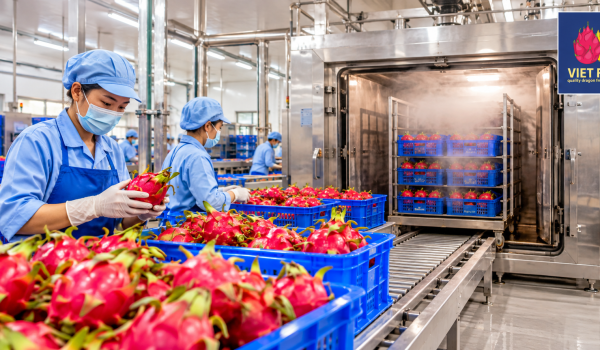
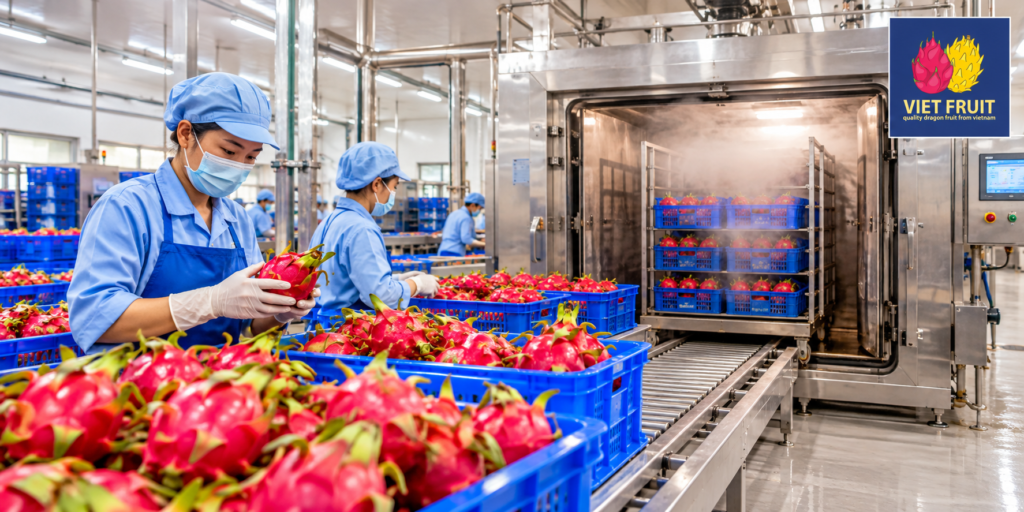
During the treatment process, the fruit is placed inside a specialised VHT chamber. Temperature, humidity and treatment duration are carefully controlled according to an approved treatment protocol. The heat gradually raises the temperature of the fruit pulp to the required level, helping to eliminate targeted pests without unnecessarily compromising fruit quality.
Unlike some chemical-based pest control methods, VHT uses heat and water vapour rather than applying a pesticide to the fruit.
However, successful treatment depends on accurate temperature control, proper loading procedures, calibrated equipment and compliance with the relevant export protocol.
Why Is VHT Important for Vietnamese Dragon Fruit?
1. Meeting international phytosanitary requirements
One of the main reasons for treating Vietnamese dragon fruit with VHT is to meet the import requirements of countries concerned about exotic fruit flies.
Fresh dragon fruit can carry quarantine pests that may threaten local agriculture if introduced into a new environment. Therefore, importing countries establish specific measures to manage these risks.
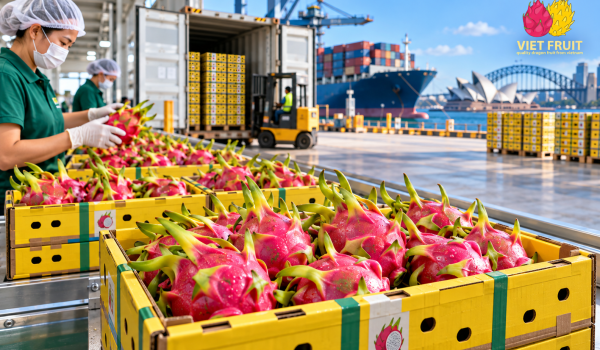
Australia, for example, recognises VHT as an important phytosanitary measure for Vietnamese dragon fruit. Its biosecurity requirements include an approved treatment process, pre-export inspection and appropriate phytosanitary documentation. The precise conditions must be checked against the current Australian Biosecurity Import Conditions (BICON).
For eligible shipments to Australia, the specified VHT protocol for fruit flies requires treatment for 40 minutes at a fruit pulp temperature of at least 46.5°C and relative humidity of at least 90%, subject to the applicable approved work plan. The treatment must be carried out at an authorised facility.
These requirements are essential for exporters who want to maintain reliable access to the Australian market.
2. Controlling fruit flies and protecting local agriculture
Fruit flies are among the most significant quarantine pests associated with fresh fruit exports.
Certain fruit fly species can damage agricultural crops and create serious problems for local growers. If introduced into a new country, they may establish populations and cause economic losses.
VHT helps manage this risk by exposing the fruit to a carefully controlled heat treatment designed to eliminate targeted fruit flies.
As a result, compliant treatment supports the safe international movement of Vietnamese dragon fruit while helping importing countries protect their agricultural industries.
Nevertheless, VHT does not replace every biosecurity measure. Other pests, including mealybugs, may require visual inspection and additional corrective action before export.
3. Opening doors to demanding export markets
International market access depends on a combination of product quality, food safety, traceability and compliance with importing-country regulations.
For Vietnamese dragon fruit exporters, VHT can be a decisive requirement when supplying markets such as Australia, where the import protocol specifies an approved treatment or another explicitly permitted risk-management pathway.
Without the required treatment and supporting documentation, a shipment may be delayed, refused entry or subjected to additional regulatory action.
Therefore, exporters must coordinate closely with growers, packing houses, approved treatment facilities, freight forwarders and importers. Planning the treatment process correctly helps reduce avoidable shipment problems and supports long-term commercial relationships.
4. Protecting fresh fruit quality
Dragon fruit is a delicate product. Its bright skin, fresh appearance, firm texture and overall condition influence how customers perceive its quality.
VHT must therefore be performed under carefully controlled conditions. Excessive heat, incorrect treatment parameters or unsuitable handling can negatively affect fruit quality.
Professional treatment facilities use established operating procedures to control the process. After treatment, the fruit should be handled according to the applicable packing, cooling, storage and transportation requirements.
At Viet Fruit, we recognise that successful exporting requires more than satisfying a treatment requirement. Our objective is to supply dragon fruit that meets the agreed specifications and arrives in the best possible condition.
It is important to understand that VHT is primarily a phytosanitary treatment. It does not automatically extend shelf life, eliminate every microorganism or guarantee that fruit will arrive without defects. Harvest maturity, farm management, packing quality, temperature control and shipping conditions remain essential.
How Does the VHT Process Work?
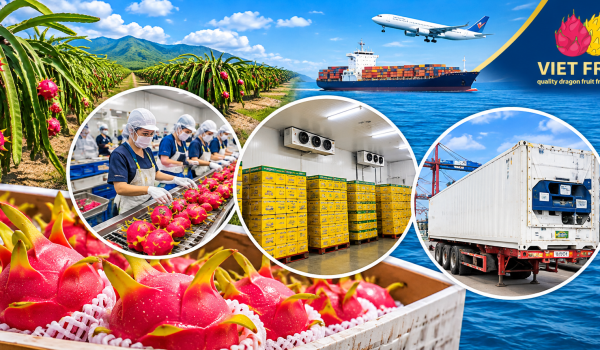
A reliable VHT process begins well before the fruit enters the treatment chamber.
Step 1: Fruit selection and preparation
Dragon fruit is harvested at the appropriate maturity and inspected for visible damage, pests and quality defects. Suitable fruit is selected for the export programme.
Step 2: Pre-treatment inspection
The fruit and accompanying documentation are checked according to the requirements of the destination market. Any identified pest or quality issues must be addressed in accordance with the applicable protocol.
Step 3: Controlled vapor heat treatment
The fruit is loaded into an approved VHT chamber. The equipment controls the temperature, humidity and treatment duration to meet the specified phytosanitary requirements.
Step 4: Cooling and post-treatment handling
After the treatment cycle, the fruit is cooled and handled according to the approved procedures. Careful handling helps prevent physical damage and unnecessary deterioration.
Step 5: Packing and documentation
The fruit is packed in suitable export packaging, with labelling and traceability information as required. The necessary phytosanitary certificate and treatment details are prepared in accordance with the destination market’s rules.
Step 6: Refrigerated transportation
Finally, the shipment is loaded and transported under suitable temperature and humidity conditions. Continuous attention to cold-chain management helps preserve freshness throughout the journey.
Every step contributes to the successful export of Vietnamese dragon fruit.
Why Choosing an Approved VHT Facility Matters
Not every heat-treatment facility is authorised to handle dragon fruit for every destination.
Importing countries may approve specific facilities and require exporters to follow agreed treatment schedules, operating procedures and documentation standards.
For example, Australia’s Department of Agriculture, Fisheries and Forestry announced the approval of an additional Vietnamese dragon fruit VHT facility effective 5 June 2026. The facility was listed under treatment facility code 010.
This illustrates the importance of working with an appropriately approved treatment provider and checking the current list of authorised facilities before arranging a shipment.
For exporters, choosing the right facility helps ensure that treatment is performed according to the applicable protocol and that the required records are available for export certification.
VHT and the Future of Vietnamese Dragon Fruit Exports
Vietnam has strong potential to expand its presence in international fresh fruit markets. However, sustainable export growth depends on maintaining consistent quality and meeting increasingly demanding import requirements.
VHT is one important part of this process. By managing specified quarantine risks, it helps support market access, protects agricultural production in importing countries and strengthens confidence in Vietnamese fruit exports.
At the same time, exporters must invest in good agricultural practices, responsible pesticide management, traceability, professional packing operations and reliable cold-chain logistics.
When these elements work together, Vietnamese dragon fruit can compete on quality, consistency and reliability rather than price alone.
Viet Fruit: Quality-Focused Vietnamese Dragon Fruit Exporter
At Viet Fruit, we understand the importance of combining high-quality fruit with professional export procedures.
Our focus is on supplying carefully selected Vietnamese dragon fruit to international markets, with attention to fruit quality, packaging, traceability and the phytosanitary requirements applicable to each destination.
We work to support our customers with reliable export coordination and fruit specifications tailored to their market needs.
Whether you are importing red-flesh or white-flesh dragon fruit, choosing an exporter who understands treatment protocols and international logistics can make a significant difference to your supply chain.
Looking for a reliable Vietnamese dragon fruit supplier? Contact Viet Fruit to discuss your requirements, packaging specifications and export destination.
We believe that successful fruit exports begin with quality at the farm and continue through every stage of the journey to the customer.
Email: sales@viet-fruit-trading.com WhatsApp: +84 77 5055 568
Follow us on Facebook